The world of Korean skincare can appear overwhelming, especially with the rise of multi-step routines and specialized products flooding the market. However, the industry has evolved significantly by 2026, moving away from extensive routines toward minimal, effective approaches that prioritize skin barrier health . This shift makes Korean skincare more accessible than ever for beginners who want to achieve healthy, glowing skin without the complexity.
This guide presents the five essential steps of a Korean skincare routine, explained with the latest insights on ingredient selection, application order, and modern skincare philosophy. Whether you are in India or elsewhere, these principles remain universally applicable and adaptable to your unique skin needs.
Why Korean Skincare Has Simplified in 2026
The traditional 10-step Korean skincare routine once dominated the beauty conversation. However, the focus in 2026 has shifted toward quality over quantity. The concept of “skinimalism” or “skip care” has gained traction, emphasizing fewer products with more effective formulas .
This evolution reflects a deeper understanding of skin biology. Overloading the skin with multiple products can compromise the skin barrier, leading to sensitivity, dehydration, and breakouts. Modern Korean skincare prioritizes barrier health, deep hydration, and gentle yet effective ingredients . The new philosophy is to use the right products rather than many products, making it ideal for beginners seeking sustainable results.

The Five Essential Steps of a Beginner Korean Skincare Routine
Step 1: Gentle Cleanser
The first step in any skincare routine is cleansing, which creates a clean canvas for subsequent products. In the morning, a gentle water-based cleanser removes oils and sweat accumulated overnight. In the evening, double cleansing becomes important, especially if you wear sunscreen or makeup.
Double cleansing involves two steps: an oil-based cleanser to dissolve sunscreen, makeup, and excess sebum, followed by a gentle water-based cleanser to lift remaining impurities . This method thoroughly cleanses without stripping the skin’s natural moisture.
For beginners, a single gentle cleanser in the morning and a double cleanse in the evening is sufficient. Choose a low-pH, sulfate-free cleanser that does not leave your skin feeling tight or dry. Ingredients like ceramides, hyaluronic acid, and glycerin help maintain hydration while cleansing .
Step 2: Hydrating Toner or Essence
Modern Korean toners are far removed from the alcohol-based astringents of the past. Today’s toners provide a lightweight layer of hydration, balance the skin’s pH, and prepare the skin for better absorption of subsequent products . Essences serve a similar purpose but often deliver deeper hydration and improve the skin’s moisture channels .
For beginners, choosing between a toner and an essence depends on your skin’s needs. A hydrating toner works well for all skin types and can be applied by patting it into the skin with your hands, avoiding the need for cotton pads. Look for ingredients like hyaluronic acid, panthenol, or centella asiatica for soothing and hydration .
| Product Type | Primary Function | Best For | How to Apply |
| Hydrating Toner | Balances pH, provides light hydration, preps skin | All skin types, especially beginners | Pat into skin with hands |
| Essence | Deeper hydration, improves absorption of treatments | Dehydrated skin, enhancing glow | Pat into skin after toner |
| Exfoliating Toner | Gently removes dead skin cells, smooths texture | Oily or acne-prone skin, used 1-3 times per week | Apply with cotton pad |

Step 3: Targeted Serum
Serums are concentrated treatments designed to address specific skin concerns such as dullness, pigmentation, or dehydration . This is where you introduce active ingredients that target your unique needs.
For a beginner focused on barrier repair and glow, niacinamide is an excellent choice. This versatile ingredient supports skin-barrier function and improves the appearance of uneven tone at concentrations around two to five percent . Hyaluronic acid is another humectant that draws and holds water in the skin, providing essential hydration .
When selecting a serum, start with one active ingredient and introduce it slowly. More is not always better. A single, well-formulated serum can deliver significant results without overwhelming your skin.
Step 4: Moisturizer
Moisturizer seals in the hydration from previous steps and supports the skin barrier, reducing transepidermal water loss (TEWL) . It creates a protective layer that keeps moisture locked in and irritants out.
Choose a moisturizer suited to your skin type. Lightweight gel-creams work well for oily or combination skin, while richer creams benefit dry or sensitive skin. Look for ingredients like ceramides, cholesterol, and fatty acids, which mimic the skin’s natural lipid structure . These barrier-supporting ingredients help maintain healthy, resilient skin.
Step 5: Sunscreen (AM Only)
Sunscreen is the most important step in any morning routine. Daily broad-spectrum sunscreen with at least SPF 30 is the most evidence-supported step for limiting UV-driven photoaging and preventing skin damage . Korean sunscreens often use the PA rating system for UVA protection, with PA+++ or PA++++ offering high protection.
Consistent sunscreen use protects the skin barrier from environmental damage, prevents hyperpigmentation, and maintains the results of your skincare routine. The best sunscreen is one that suits your skin texture so that you will apply and reapply it consistently.
| Time of Day | Step Order | Essential Products | Additions |
| Morning (AM) | 1. Gentle Cleanser | Cleanser, Moisturizer, Sunscreen | Vitamin C Serum |
| 2. Toner | |||
| 3. Serum | |||
| 4. Moisturizer | |||
| 5. Sunscreen | |||
| Evening (PM) | 1. Oil Cleanser | Oil Cleanser, Gentle Cleanser, Moisturizer | Essence, Treatment Serum, Eye Cream |
| 2. Gentle Cleanser | |||
| 3. Toner | |||
| 4. Serum | |||
| 5. Moisturizer |
The Correct Skincare Routine Order
The order of product application matters because each product prepares the skin for the next. The general rule is to apply products from thinnest to thickest consistency. Thinner products cannot penetrate thicker products, so applying serums after moisturizer would render them less effective .
This layering order ensures that active ingredients reach the skin and provide maximum benefit. Start with your cleanser, then your toner or essence, followed by serum, moisturizer, and finally sunscreen in the morning.
Ingredients to Look for as a Beginner
Understanding ingredients is more valuable than chasing brand names. Ingredients behave consistently regardless of the brand, making it easier to compare products across price points .
| Ingredient | Role in Skincare | Best For |
| Niacinamide (Vitamin B3) | Supports barrier function, improves uneven tone | All skin types, barrier repair, dullness |
| Hyaluronic Acid | Humectant, draws and holds water in the skin | Dehydrated skin, plumping |
| Centella Asiatica (Cica) | Soothing, supports barrier repair | Sensitive skin, redness relief |
| Ceramides | Replenishes skin lipids, reduces moisture loss | Damaged or dry skin, barrier repair |
| Panthenol (Vitamin B5) | Soothing and moisturizing | Sensitive or irritated skin |
The Right Products for Your Skin Type
Every skin type requires a slightly different approach to hydration and moisturization. The table below outlines product characteristics suited to different skin types.
| Skin Type | Cleanser | Toner/Essence | Serum | Moisturizer |
| Dry Skin | Creamy, non-foaming with ceramides | Hydrating, milky toner | Hyaluronic acid, ceramide serum | Rich cream with ceramides |
| Oily Skin | Gentle gel or foaming cleanser | Lightweight, balancing toner | Niacinamide, BHA | Lightweight gel-cream |
| Combination Skin | Gentle, balanced cleanser | Hydrating toner | Niacinamide | Gel-cream or lotion |
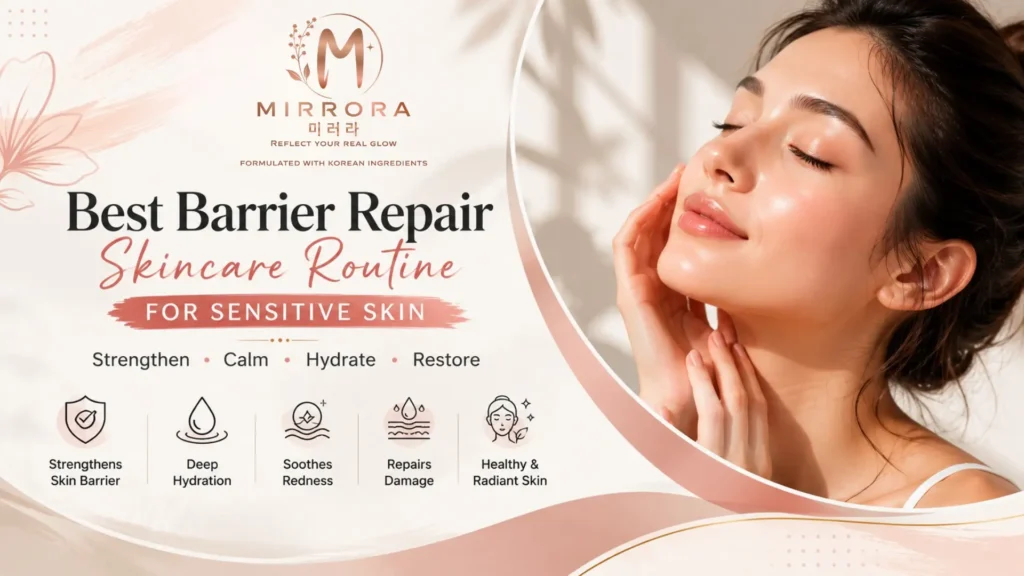
| Sensitive Skin | Gentle, fragrance-free | Soothing toner (centella, panthenol) | Niacinamide, centella | Fragrance-free, barrier-supporting cream |
Tips for Beginners: Start Simple and Build
Starting a new skincare routine can be exciting, but patience is essential. Introducing too many products at once can lead to irritation and make it difficult to identify what is working or causing problems.
1. Start with the basics.
Begin with just a gentle cleanser, moisturizer, and sunscreen. Once your skin is comfortable with these, gradually add a serum or toner one at a time.
2. Introduce one product at a time.
Test each new product for at least one to two weeks before adding another . This allows you to monitor how your skin reacts and identify any potential irritants.
3. Patch test new products.
Apply a small amount of a new product to your inner forearm or behind your ear for a few days before using it on your face . This helps determine if you have a sensitivity to the product.
4. Be patient.
Skincare results take time. Consistency matters more than using many products inconsistently. A simple routine performed daily is more effective than a complex routine done occasionally.
5. Adjust with seasons.
Your skin’s needs may change with the weather. You might prefer richer moisturizers in winter and lighter layers in summer . Listening to your skin and adjusting accordingly is part of an effective routine.
Conclusion
Building a Korean skincare routine in 2026 is less about following a rigid set of rules and more about understanding your skin’s needs. The shift toward skinimalism has made Korean skincare more accessible than ever, emphasizing effective ingredients and consistent habits over numerous steps.
The five-step routine of cleanser, toner or essence, serum, moisturizer, and sunscreen provides a solid foundation for anyone beginning their skincare journey. By focusing on barrier health, choosing ingredients wisely, and introducing products gradually, beginners can achieve healthier, more radiant skin without the overwhelm. The best routine is one that feels intuitive, sustainable, and tailored to you.
Frequently Asked Questions
What is the most basic Korean skincare routine?
The most basic routine consists of three steps: gentle cleanser, moisturizer, and sunscreen. This foundation supports the skin barrier and protects it from environmental damage. You can build upon this foundation by adding a hydrating toner and a targeted serum as your skin adjusts.
Do I need a 10-step Korean skincare routine?
No. The 10-step routine was never a strict rule. In 2026, the trend is toward minimalism, with experts recommending fewer, more effective steps. Starting with five essential steps is sufficient for most beginners to achieve healthy, glowing skin .
Can I use Korean skincare products if I have sensitive skin?
Yes. Korean skincare emphasizes gentle, soothing ingredients that are suitable for sensitive skin. Look for products with centella asiatica, panthenol, and ceramides, and avoid fragrances and harsh exfoliants. Patch testing new products is always recommended .
What is the correct order to apply Korean skincare products?
The standard order is cleanser, toner or essence, serum, moisturizer, and sunscreen in the morning. This layering order follows the thin-to-thick rule, ensuring each product can absorb effectively .
How long does it take to see results from a Korean skincare routine?
Results vary depending on the products used and individual skin concerns. Hydration improvements can appear within days, while barrier repair and glow may take several weeks. Consistency is key for visible, lasting results.
Is Korean skincare suitable for Indian skin?
Yes. The principles of gentle cleansing, hydration, and barrier support are universally beneficial. In humid climates, opt for lightweight textures and gel-based moisturizers. In drier or cooler seasons, richer creams may be more suitable. Adapt the routine to your environment and skin’s response.